Finding the best mobile games for kids today can feel overwhelming. Parents want their children to have fun, but they also want them to learn, stay safe, and avoid inappropriate content. At the same time, kids are naturally drawn to bright visuals, challenges, rewards, and characters they can connect with, so boring “learning apps” rarely hold their attention for long.
The good news is that there are many games designed specifically with children in mind that focus on learning, creativity, and problem-solving while still being genuinely fun to play. When parents combine the right games with a few simple safety habits, mobile gaming becomes a powerful tool for learning, not just a way to pass time. This guide explains what to look for, how to keep kids safe, and the types of games that are both educational and age-appropriate.
What Makes a Kids’ Game “Safe” and “Educational”?
Kids’ games are not all created equal. Some are packed with aggressive ads, confusing menus, or online chats that parents cannot easily control. Others are simple but brilliant, teaching kids math, language, creativity, or logic without them even noticing they are learning.
A mobile game can be considered safe and educational for kids when it:
-
Avoids inappropriate content such as violence, horror themes, and adult jokes.
-
Uses simple controls and clear menus so kids can navigate without hidden traps or tricky ads.
-
Teaches or reinforces a skill like reading, counting, problem-solving, memory, or creativity.
-
Respects kids’ attention and does not push them to spend money or watch endless ads.
Understanding these basics makes it much easier to choose games that parents can feel good about.
How to Choose Safe Mobile Games for Kids
Check Age Ratings and Reviews
Before downloading any game for a child, age ratings are the first filter to check. Platform ratings help parents quickly see if a game is meant for young kids, older children, or teens. User reviews can also give clues about hidden ads, tricky in-app purchases, or content that might not match the official rating.
Parents should pay attention to comments about pop-up ads, online chat, or confusing subscriptions. If multiple reviewers mention “too many ads” or “not really for kids,” it is usually a sign to skip that game and look for something better.
Look for Clear, Simple Monetization
A truly child-friendly game should never pressure kids to spend money or trick them into tapping purchase buttons. Games designed for families usually:
-
Offer a one-time purchase or a clear premium version.
-
Either remove ads completely or use very limited, non-intrusive ads.
-
Avoid putting purchase buttons where kids can tap them accidentally.
If a game constantly locks basic features behind paywalls or pushes kids to buy gems, coins, or “VIP passes,” it is not ideal for young players.
Types of Educational Mobile Games Kids Love
Puzzle and Logic Games
Puzzle games are one of the best categories for children because they train the brain while still feeling like play. Matching puzzles, shape sorting, simple mazes, and pattern recognition games help kids develop:
-
Logical thinking
-
Problem-solving skills
-
Patience and persistence
These games are especially good for school-age children who are learning to think step-by-step and work through challenges instead of giving up quickly.
Math and Numbers Games
Many kids say they “hate math” until they play a game that turns numbers into a fun challenge. Mobile math games often include:
-
Counting, addition, subtraction, and basic multiplication
-
Number recognition and ordering
-
Timed challenges with rewards and badges
The key benefit is that math games give children a safe place to practice without fear of being judged. They can try again and again, see instant feedback, and slowly build confidence with numbers.
Language and Reading Games
Language-focused games are great for early readers or kids learning a second language. These games might include:
-
Letter tracing and alphabet recognition
-
Simple word-building and phonics
-
Story-based adventures where kids read dialogue or short sentences
By combining pictures, sound, and interaction, these games make reading feel more like an adventure than a school assignment. They help children:
-
Expand vocabulary
-
Improve pronunciation
-
Gain confidence with reading aloud
Creativity and Drawing Games
Creativity games allow kids to explore art and design without needing paper, pencils, or a big mess. These games can involve:
-
Digital coloring books
-
Drawing tools
-
Simple animation or character customization
Creative games are especially helpful for kids who are more visually or artistically inclined. They encourage imagination, self-expression, and experimentation without strict rules or “wrong answers.”
Science and Exploration Games
Some kids are naturally curious about how things work, and science-themed games are perfect for them. These games can cover topics like:
-
Space, planets, and the solar system
-
Animals and nature
-
Basic physics or cause-and-effect
Even simple games that let kids experiment with virtual lab tools, build machines, or explore virtual worlds can teach them how their choices affect outcomes. This builds a strong foundation for later interest in STEM subjects.
How to Keep Kids Safe While They Play
Use Parental Controls and Profiles
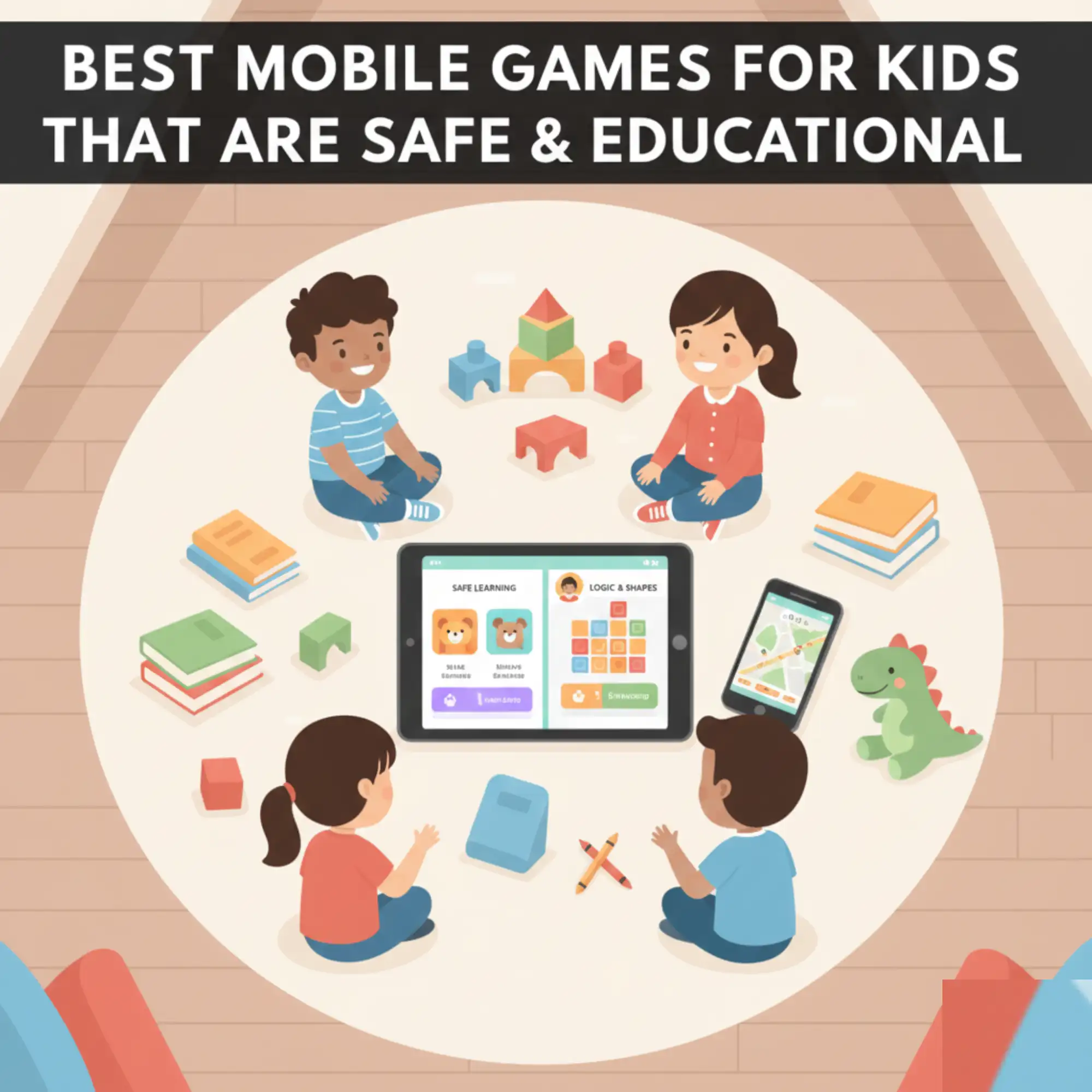
Most modern smartphones and tablets include built-in parental controls. Parents can:
-
Create a child profile with limited access to apps.
-
Restrict in-app purchases or require a password for every purchase.
-
Set screen time limits so kids cannot play all day.
Combining parental controls with common sense rules at home keeps gaming fun without allowing it to take over a child’s entire day.
Play Together and Talk About Games
One of the best ways to keep kids safe and help them learn is to play with them. Sitting beside a child for even 10–15 minutes while they play:
-
Helps parents see what kind of content the game includes.
-
Opens the door to conversations about what they’re learning.
-
Makes kids feel proud to show their skills and progress.
When parents take gaming seriously and show interest, children are more likely to talk about what they’re playing instead of hiding it.
Balancing Fun and Learning
Make Learning Feel Like a Game, Not Homework
Kids can usually tell when something is “just school in disguise.” The best educational games hide the learning inside fun mechanics. For example:
-
Solving math problems to unlock treasure chests.
-
Spelling words to help a character move through a level.
-
Completing logic puzzles to fix a broken machine in the game world.
When learning is woven into the story and gameplay, kids are more engaged and more likely to stick with it over time.
Rotate Games to Avoid Boredom
Children get bored quickly if they play the same style of game every day. To keep mobile gaming fresh and productive, parents can:
-
Offer a mix of puzzle, creativity, and learning games.
-
Introduce a new game occasionally while keeping old favorites.
-
Encourage kids to explain what they like about each game.
Rotating games gives kids exposure to different skills and prevents them from zoning out on one repetitive app.
Screen Time Limits and Healthy Habits
Set Reasonable Time Limits
Even the best educational game is still screen time. To keep things healthy, it helps to set simple rules, such as:
-
No games before school
-
Limited play after homework is done
-
Extra time on weekends or holidays
Clear rules help kids see mobile gaming as a fun bonus, not a right they’re entitled to all day long.
Encourage Breaks and Offline Play
Reminding kids to take short breaks helps protect their eyes and avoid tiredness. Parents can:
-
Suggest a quick stretch or drink of water between levels.
-
Encourage physical play, reading, or board games after a gaming session.
Balancing digital games with offline activities ensures kids grow in all areas, not just their screen skills.
Why Educational Mobile Games Are Worth It
When used thoughtfully, mobile games can support what kids are already learning at school and at home. They can:
-
Turn boring subjects into exciting challenges.
-
Provide safe spaces to practice skills without embarrassment.
-
Encourage curiosity, creativity, and independent problem-solving.
Instead of seeing mobile gaming as the enemy, parents can turn it into an ally by choosing safe, age-appropriate, educational games and staying involved in what their children are playing. That combination—good games, clear rules, and engaged parents—creates a healthy digital environment where kids can both play and learn.